

Information on solar panels is essential today as more homeowners and businesses look for clean, cost-effective energy solutions. Solar panels are no longer just a trend—they are a long-term investment that reduces electricity bills, lowers carbon emissions, and increases energy independence.
In simple terms, solar panels convert sunlight into usable electricity using photovoltaic (PV) technology. This guide explains how solar panels work, their types, costs, efficiency, installation, and long-term benefits, helping you make an informed decision.
What Are Solar Panels?
Solar panels, also called photovoltaic (PV) panels, are devices that convert sunlight into electricity. Each panel is made up of multiple photovoltaic cells, usually composed of silicon, a semiconductor material.
When sunlight hits these cells, they trigger the photovoltaic effect, producing electrical energy without fuel, noise, or pollution.
Key takeaway:
Solar panels produce electricity directly from sunlight, making them a reliable form of renewable energy.
How Do Solar Panels Work? (Step-by-Step)
Understanding how solar panels work is the foundation of accurate information on solar panels.
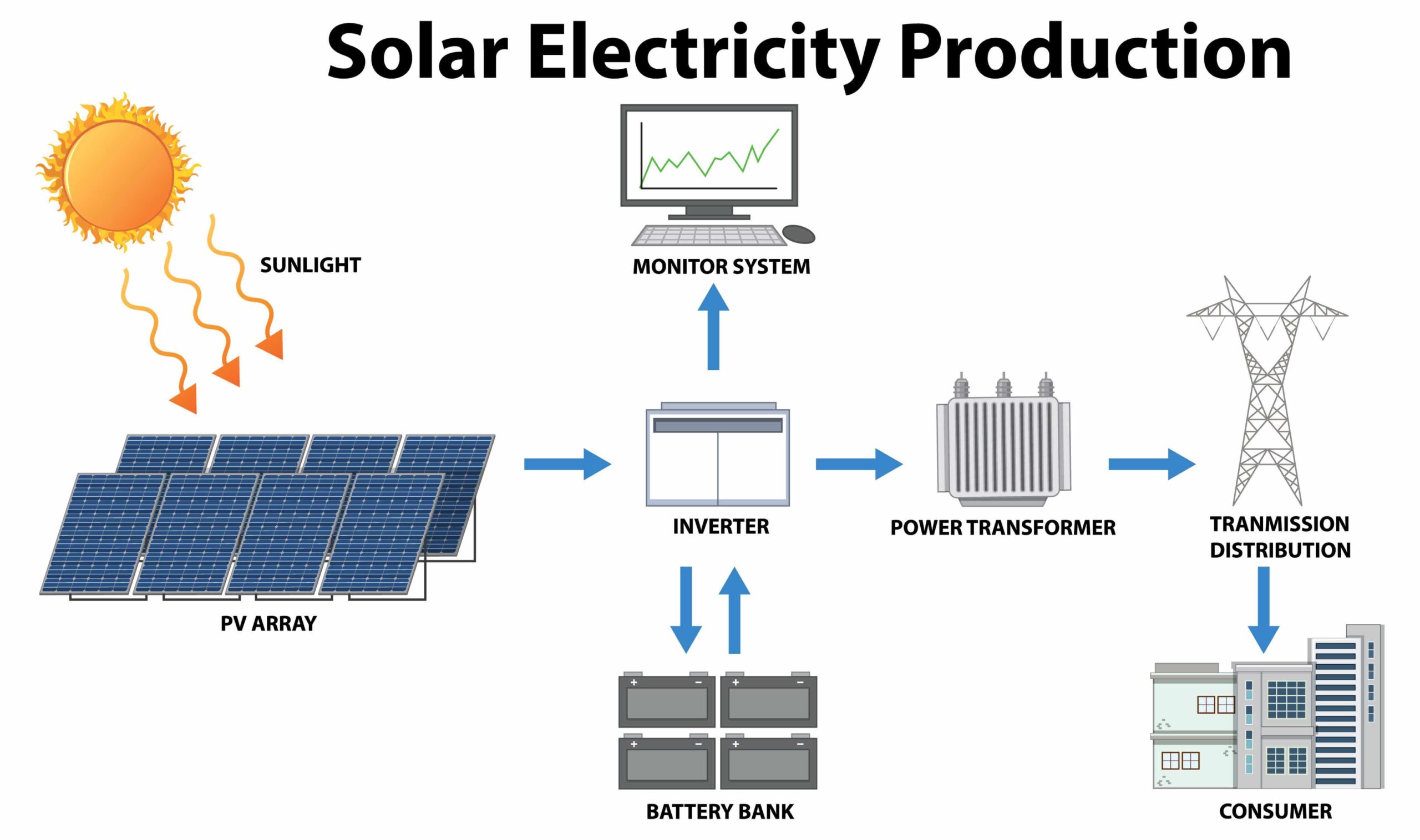
- Sunlight hits photovoltaic cells: Photons from sunlight strike silicon cells.
- Electrons start moving: The energy knocks electrons loose, generating DC electricity.
- Electric field guides the flow: Positive and negative silicon layers push electrons in one direction.
- Inverter converts DC to AC: A solar inverter changes DC electricity into alternating current (AC).
- Electricity powers your home: AC electricity runs appliances or feeds excess power to the grid via net metering.
Even on cloudy days, solar panels continue to generate electricity, though at reduced output.
Main Components of a Solar Panel System
A complete solar power system includes:
- Solar panels – Capture sunlight
- Inverter – Converts DC to AC power
- Mounting structure – Holds panels securely
- Solar array wiring – Connects components
- Net meter – Tracks energy export/import
- Battery (optional)—Stores energy for backup
These components work together to form a grid-connected or off-grid solar panel system.
Types of Solar Panels Explained
Choosing the right type is a crucial part of information on solar panels.
1. Monocrystalline Solar Panels
- High efficiency (18–24%)
- Long lifespan
- Best for limited roof space
- Higher upfront cost
2. Polycrystalline Solar Panels
- Moderate efficiency (15–18%)
- More affordable
- Slightly larger space required
3. Thin-Film Solar Panels
- Lightweight and flexible
- Lower efficiency
- Used for special applications
4. Bifacial Solar Panels
- Generate power from both sides
- Higher output in open areas
- Growing in popularity
Solar Panel Efficiency: What It Really Means
Efficiency measures how much sunlight is converted into electricity.
- Most residential panels: 15%–22% efficiency
- High-efficiency panels: 22%+
- Factors affecting efficiency:
Temperature
Shading
Dust and dirt
Panel orientation
Weather conditions
Pro tip: Proper installation and cleaning can boost output by up to 20%.
Cost Information on Solar Panels (India)
Solar panel pricing depends on system size, panel type, and installation complexity.
Average Solar Panel Costs (Before Subsidy)
- 1 kW system: ₹40,000 – ₹85,000
- 3 kW system: ₹1.2 – ₹2.2 lakh
- 5 kW system: ₹2 – ₹3.5 lakh
Individual photovoltaic panels usually cost ₹20–₹40 per watt depending on technology.
Government subsidies and tax benefits significantly reduce final costs.
Grid-Connected vs Off-Grid Solar Systems
Grid-Connected Solar Panels
- Connected to utility grid
- Uses net metering
- No battery required
- Most cost-effective
Off-Grid Solar Panels
- Uses battery storage
- Ideal for remote locations
- Higher upfront cost
Hybrid Solar Systems
- Grid + battery backup
- Works during power cuts
- Most flexible solution
Lifespan and Degradation of Solar Panels
- Average lifespan: 25–30 years
- Annual degradation: 0.5%–1%
- Most panels retain 80% efficiency after 25 years
Regular maintenance ensures long-term performance.
Maintenance Requirements
Solar panels are low-maintenance systems:
- Cleaning 2–4 times a year
- Visual inspection
- Inverter health check
Advanced inspections using aerial thermal imaging services help detect hidden faults and improve performance.
Environmental Benefits of Solar Panels
- Zero greenhouse gas emissions
- Reduces fossil fuel dependency
- Supports renewable energy goals
- Low water usage
- Fully recyclable materials
Solar power is one of the cleanest forms of electric generation available.
Information on Solar Panels for Homeowners
For homes, solar panels provide:
- Lower electricity bills
- Protection from rising tariffs
- Increased property value
- Energy independence
- Reliable power even during grid instability
With correct system sizing, many homes achieve 70–100% energy offset.
People Also Ask
- What is a solar panel?
A solar panel is a device that converts sunlight into electricity using photovoltaic cells. - Do solar panels work on cloudy days?
Yes, they still produce electricity with diffused sunlight. - How long do solar panels last?
Solar panels typically last for 25–30 years with minimal performance loss. - Are solar panels expensive?
Initial cost exists, but long-term savings outweigh it. - Can solar panels power an entire home?
Yes, with correct system sizing and optional batteries. - What maintenance do solar panels need?
Solar panels require basic cleaning and periodic inspection. - Is net metering necessary?
Yes, net metering is necessary for grid-connected systems to export excess power. - Which solar panel type is best?
Monocrystalline panels offer the highest efficiency. - Do solar panels increase home value?
Yes, homes with solar systems often sell at higher prices. - Are solar panels safe?
Yes, they are silent, safe, and weather-resistant.
Conclusion: Why Solar Panels Are Worth It
This complete information on solar panels shows why solar energy is one of the smartest investments today. With falling costs, improved efficiency, government incentives, and long lifespans, solar panels offer unmatched value for homes and businesses alike.
Whether your goal is cost savings, sustainability, or energy security, solar panels deliver long-term benefits that far exceed their initial cost. Installing a well-designed solar panel system today means cleaner energy, predictable power costs, and a future-ready home.