

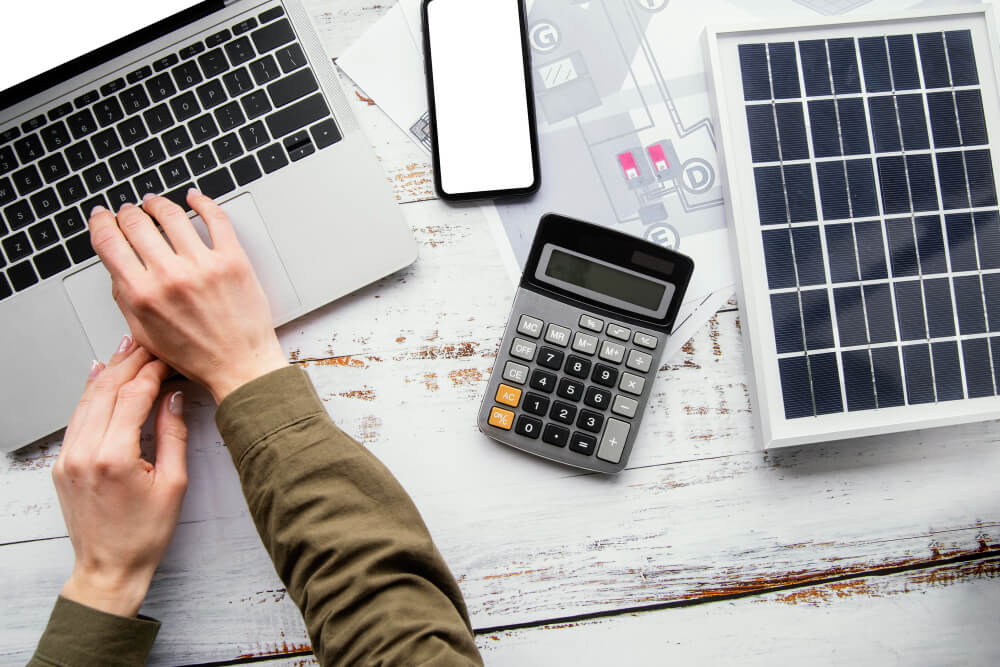
The cost of solar panel installation for home in India typically ranges between ₹40,000 and ₹70,000 per kW, depending on system size, panel technology, roof type, location, and government subsidies. For most Indian households, a 3kW to 5kW rooftop solar system costs anywhere from ₹1.2 lakh to ₹3.5 lakh before subsidy, making solar one of the most cost-effective long-term energy investments available today In simple terms, the cost of solar panel installation for a home is not just about buying panels—it includes the solar power system design, mounting structure, inverter, wiring, net metering, and installation quality, all of which directly impact performance and savings for the next 25 years.
Cost of solar panel installation for home refers to the total expense of installing a residential rooftop solar system, including panels, inverter, mounting structure, wiring, labor, approvals, and net metering. In India, it averages ₹40,000–₹70,000 per kW, with subsidies reducing the final cost significantly.
Solar Panel Installation Cost by System Size (India)
Average Price Table (Before Subsidy)
| System Size | Ideal For | Approximate Cost |
|---|---|---|
| 1 kW | Small homes | ₹40,000 – ₹55,000 |
| 3 kW | 2–3 BHK homes | ₹1.2 – ₹1.6 lakh |
| 4 kW | Larger families | ₹1.6 – ₹2.4 lakh |
| 5 kW | High usage / AC homes | ₹2–₹3.5 lakh |
These prices align closely with the current Solar Price for Home trends and market benchmarks.
Component-Wise Cost Breakdown
Understanding the cost of solar panel installation for home becomes easier when broken into parts:
1. Solar Panels (40–50% of total cost)
Prices depend on Solar Panel Types:
- Monocrystalline: Higher efficiency, higher cost
- Polycrystalline: Budget-friendly, slightly lower efficiency
- Advanced options like BIPV Solar Panel integrate directly into rooftops or facades
2. Solar Inverter (15–20%)
Converts DC to AC power. Cost varies by system capacity and brand.
3. Mounting Structure & Wiring (10–15%)
Roof height, material, and wind load affect price.
4. Installation, Net Metering & Approvals (10–15%)
Includes labor, safety equipment, earthing, and grid connection.
Factors Affecting Solar Panel Installation Cost in India
Several variables influence the final cost of solar panel installation for home:
- Solar system size (kW capacity)
- Type of solar panels and inverter
- Roof structure and shading
- City and labor costs
- Quality of components from reliable Suppliers of Solar Panels
- Availability of net metering
- Government subsidies under PM Surya Ghar Muft Bijli Yojana
Government Subsidy: How Much Can You Save?
Under PM Surya Ghar Muft Bijli Yojana:
- Up to 40% subsidy for systems ≤3kW
- Up to 20% subsidy for systems between 3 and 10 kW
This can reduce the Cost of Solar System for Home by ₹40,000–₹78,000, drastically lowering payback time.
Cost Per Unit & Long-Term ROI
- Solar Electricity Cost (25-Year Average): ₹1.5 – ₹2.5 per unit (kWh)
- Payback Period: 4–6 years depending on location and usage
- Lifetime Savings: ₹10–15 lakh for a typical 3–5 kW system
Compared to rising grid tariffs, solar energy panels price delivers stable, predictable electricity for decades.
On-Grid vs Off-Grid Installation Cost
- On-grid systems: Lower upfront cost, net metered, ideal for cities
- Off-grid systems: Higher cost due to batteries, suited for power-cut areas
Most homeowners prefer grid solar system setups due to faster ROI.
How to Reduce Solar Installation Cost
- Choose the right system size (avoid oversizing)
- Opt for high-efficiency panels when roof space is limited
- Use professional site surveys (often supported by Aerial Thermal Imaging Services)
- Keep panels clean—some installers use drone aerial photography and drone 3d mapping for inspections
Is Solar Worth It for Homes in India?
Absolutely. With falling solar pv panels price, rising electricity bills, and strong subsidies, the cost of solar panel installation for home has never been more affordable.
Solar also:
- Increases property value
- Reduces carbon footprint
- Protects against future tariff hikes
People Also Ask
- What is the average cost of solar panel installation for home in India?
The average cost of solar panel installation for a home in India ranges from ₹40,000 to ₹70,000 per kW. For most households, a 3kW to 5kW system typically costs ₹1.2 lakh to ₹3.5 lakh before government subsidies, depending on panel type, inverter quality, and location. - How much does a 3kW solar system cost after subsidy?
After government subsidy, the cost of a 3kW rooftop solar system usually comes down to ₹85,000 to ₹1.2 lakh. Subsidies under schemes like PM Surya Ghar can reduce the upfront cost by up to 40%, making solar more affordable for homeowners. - How many years does it take to recover the solar installation cost?
Most homeowners recover their solar installation cost within 4 to 6 years through reduced electricity bills. After the payback period, the electricity generated is virtually free for the remaining system lifespan. - Which solar panel type is best for home use?
Monocrystalline solar panels are considered the best for home use because they offer higher efficiency, require less rooftop space, and perform better in hot weather compared to other panel types. - What is the lifespan of a home solar system?
A home solar system typically lasts 25 to 30 years. Solar panels usually come with 25-year performance warranties, while inverters last around 10–15 years and may need replacement once during the system’s life. - Is net metering available in all states?
Net metering is available in most Indian states, but the rules vary by state and local DISCOM. Some states impose system size limits or billing restrictions, so it’s important to check local net-metering policies before installation. - How much rooftop space is required for 5 kW solar?
A 5kW solar system typically requires 450 to 500 square feet of shadow-free rooftop space. The exact requirement depends on the efficiency and size of the solar panels used.
Conclusion
Understanding the cost of solar panel installation for home helps homeowners make an informed and confident decision about switching to clean energy. While the upfront investment may seem significant, government subsidies, falling equipment prices, and long-term electricity savings make solar power a highly cost-effective solution. With payback periods of just a few years and system lifespans extending beyond two decades, residential solar offers excellent financial returns along with environmental benefits.
By choosing the right system size, quality components, and experienced installers, homeowners can significantly reduce electricity bills and protect themselves from rising energy costs. In the long run, solar panel installation is not just an energy upgrade—it’s a smart investment that adds value to your home while contributing to a more sustainable future.